

LOCAL RESIDENTIAL PLUMBING SERVICE
Drain Unclogging With Clear Answers and Careful Work
A clogged drain can start as a small inconvenience and quickly become a disruptive plumbing problem. Slow water, gurgling sounds, unpleasant odors, and fixtures that back up into one another are all signs that flow is restricted somewhere in the system. Papa Bear Plumbing and Services provides professional drain unclogging for household sinks, tubs, showers, toilets, floor drains, branch lines, and larger drainage concerns.
The best solution depends on where the blockage is located and what is causing it. Grease, soap residue, hair, food debris, paper products, mineral accumulation, foreign objects, damaged piping, and root intrusion can create similar symptoms but require different responses. We begin by listening to what you have observed, assessing the affected fixtures, and choosing a clearing method appropriate for the line rather than treating every clog the same way.
KNOW THE WARNING SIGNS
Common Signs You May Need This Service
- A sink, tub, shower, or floor drain empties slowly
- Water backs up when another fixture is used
- Drains make gurgling, bubbling, or sucking sounds
- A toilet requires repeated plunging or rises before draining
- Unpleasant odors return even after the fixture is cleaned
- The same drain clogs again shortly after temporary relief
One Slow Drain or a Larger Drain-Line Problem?
A single slow fixture often points to a blockage in that fixture’s trap or nearby branch line. When several fixtures are slow at the same time, when a toilet affects a tub or shower, or when water appears at a lower drain as another fixture empties, the restriction may be farther downstream. The pattern of symptoms helps narrow the search before equipment is used.
Location matters because a method that is effective for a short sink branch may not reach or clear a blockage in a larger building drain. It also helps identify urgency. A partially restricted line may still pass some water, while a full blockage can overflow without warning. Tell us which fixtures are affected, when the problem began, and whether another drain changes when water is used. Those details help us arrive prepared and reduce guesswork.
Common Causes of Clogged Household Drains
Kitchen drains commonly collect fats, oils, food residue, and detergent film. Even when grease goes down as a liquid, it can cool inside the piping and trap additional debris. Bathroom sinks, tubs, and showers tend to accumulate hair, soap, grooming products, and mineral deposits. Toilets can clog when too much paper is used or when wipes, hygiene products, toys, and other items enter a line that was designed for waste and toilet paper.
Recurring or widespread problems may involve conditions beyond everyday buildup. A sagging section of pipe can hold water and debris. Misaligned or damaged joints can catch material. Older piping may have a rough interior that restricts flow. Outside the home, roots may enter through defects in a buried sewer line. Professional clearing restores flow, but the pattern and material recovered may also suggest that further evaluation is worthwhile.
How Professional Drain Unclogging Works
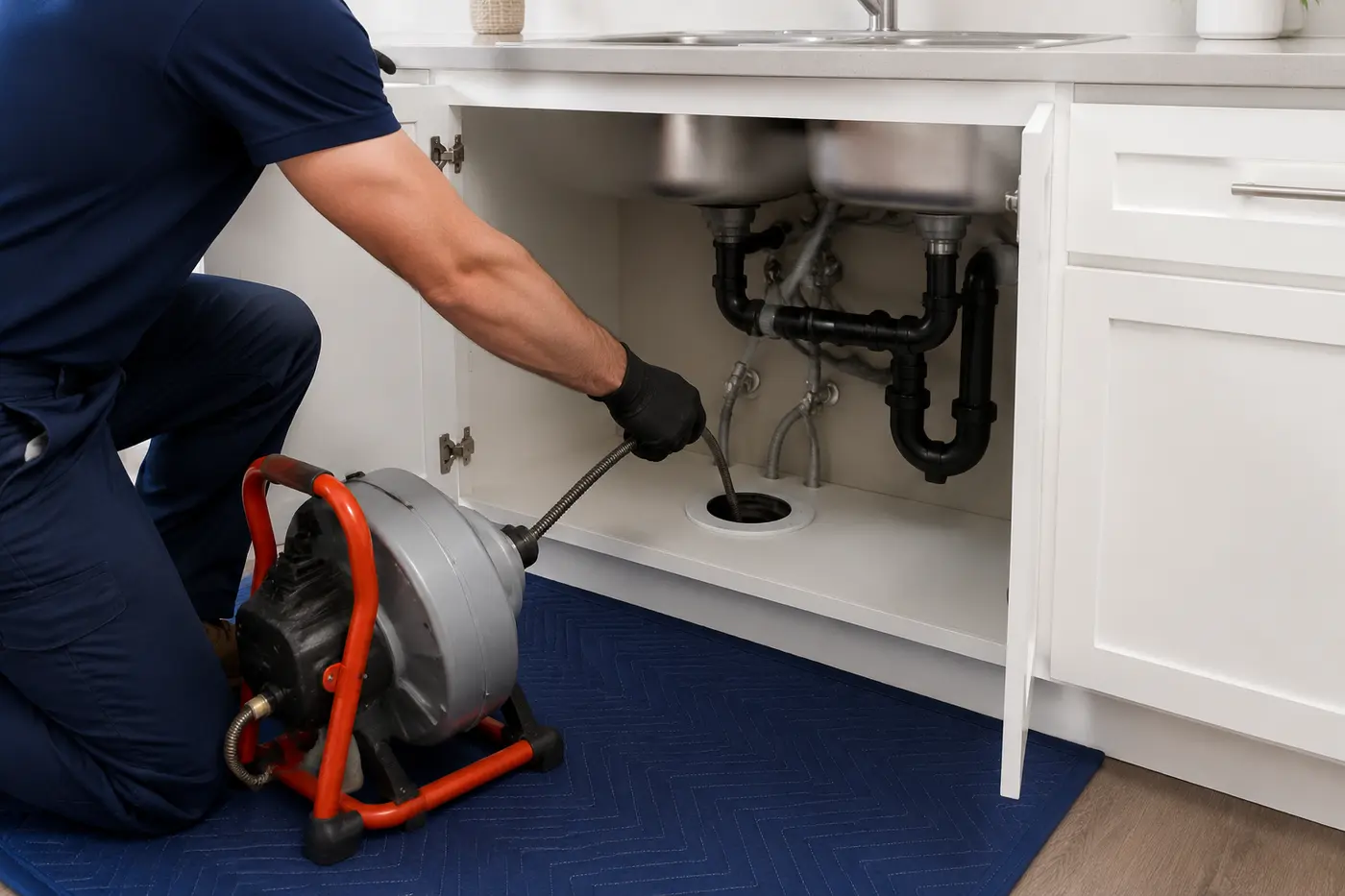
Professional drain-cleaning equipment is selected for the pipe size, access point, likely blockage, and condition of the system. A cable machine can cut through or retrieve many common obstructions and restore an opening through the line. Other situations may call for a different head, smaller equipment, cleaning through an accessible trap, or service from a dedicated cleanout. The objective is controlled clearing without unnecessary force.
After the restriction is addressed, we test flow and observe how the fixture behaves. Good testing is important because the first release of standing water does not always mean the line is fully open. We also look for leakage at accessible connections disturbed during service. If the drain remains slow, quickly loses flow again, or shows signs of a damaged line, we explain the next diagnostic step instead of presenting a temporary improvement as a complete solution.
Why Repeated Chemical Drain Cleaner Is Usually Not the Best Plan
Store-bought drain chemicals may provide limited relief for some soft organic buildup, but they do not identify the location or condition of the blockage. Product can remain trapped above a clog, creating a hazardous situation for the homeowner or plumber who later opens the line. Harsh chemicals may also affect certain finishes, seals, metal components, and older plumbing, especially when products are mixed or used more often than directed.
A drain that repeatedly needs chemical treatment is giving useful information: the underlying restriction has not been resolved. Mechanical clearing and proper evaluation allow the problem to be approached directly. If you have already poured a product into the drain, tell us what was used and when. That information helps us protect you, the work area, and our technician during service.
What Recurring Clogs Can Tell You
A clog that returns in the same fixture may be caused by incomplete removal of buildup, a problem farther down the branch, or a pipe condition that encourages debris to collect. Repeated kitchen stoppages may be associated with grease coating the interior of the line. Recurring bathroom blockages may involve hair and product buildup beyond the trap. A toilet that frequently struggles may have an object in the trapway, a drainage issue, or a performance problem unrelated to the main line.
Timing is useful. A drain that slows again within days suggests a different problem than one that gradually accumulates material over several years. Note whether the issue changes after heavy laundry use, multiple showers, dishwashing, rain, or use of a particular fixture. We use that history with on-site observations to decide whether another clearing approach, inspection, repair, or maintenance plan is reasonable.
Warning Signs of a Main Drain or Sewer Blockage
Several drains backing up together, wastewater appearing in a tub or shower, bubbling toilets, or overflow at the lowest drain in the home can indicate a blockage in a larger shared line. Stop using water when these symptoms appear. Continuing to run sinks, showers, appliances, or toilets adds more water behind the restriction and increases the chance of an unsanitary overflow.
A larger-line blockage deserves prompt attention because the source may not be close to the fixture where water appears. Access, pipe material, the location of cleanouts, and the cause of the obstruction influence the service approach. Once flow is restored, we explain any evidence that suggests roots, pipe damage, heavy accumulation, or another condition that may require additional investigation.
Practical Ways to Reduce Future Drain Clogs
Use sink strainers where appropriate, keep grease and cooking oil out of kitchen drains, and place food scraps in the trash or compost. Wipe oily pans before washing them. In bathrooms, remove visible hair from drain covers and avoid rinsing thick product residue into the sink or shower. Toilets should receive only human waste and toilet paper, even when packaging describes another product as flushable.
Prevention also means responding to changes early. A drain that is becoming slower, noisier, or more odorous is easier to address before it stops completely. Avoid opening pipes or using powered equipment unless you understand the system and can work safely. If several fixtures are involved or the problem keeps returning, professional evaluation is usually more useful than repeating temporary fixes.